
Summer in Tampa brings a daily rhythm that locals know well: a hot, bright morning, building clouds by afternoon, and then a sudden downpour that turns the roads into rivers in minutes. Add the threat of tropical storms and lightning, and it is clear that rainy season puts real demands on your car. The good news is that a little preparation goes a long way. This guide covers how to get your car ready for Florida’s summer storms, what to check before the rain arrives, how to drive safely when it does, and how to handle the aftermath. If you are looking for rainy season car care in Tampa, these tips will help you stay safer and avoid the kind of breakdown that always seems to happen in the middle of a storm.
Why Rainy Season Is Tough on Your Car
Heavy rain affects nearly every system that keeps you safe on the road. You need to see clearly, stop reliably, stay connected to the pavement and keep your electrical system dry. At the same time, Tampa’s heat and humidity wear down rubber parts, and frequent downpours expose any weak spot in your car. A worn wiper blade, a tired tire or a battery that is barely holding on may work fine on a sunny day and then fail when conditions turn bad. That is why the best time to check these items is before the storms arrive, not during them.Start With Visibility: Wipers, Glass and Lights
Check and replace your wiper blades
Wiper blades are made of rubber, and Florida sun is hard on rubber. Over a long summer, the edges harden, crack and split. Worn blades leave streaks, smear water across the glass, or skip and chatter across the windshield. In a heavy downpour, that can make it very hard to see. Warning signs include streaking, squeaking, skipping, visible cracks and edges that no longer press evenly against the glass. If your blades show any of these signs, replace them. Many drivers swap blades once a year or so, and the rainy season is a smart time to do it. Your owner’s manual will list the correct sizes, and replacement is often a quick job.Keep the windshield clean inside and out
Dirt, pollen and a film of road grime can make glare and streaking much worse when it rains. Clean the outside of the glass thoroughly, and do not forget the inside, where a hazy film can build up over time. Top off your washer fluid too, since storms kick up a lot of spray from other vehicles. If your windshield has chips or cracks, have them looked at, because heat and temperature swings can make them spread.Test every light
In heavy rain, other drivers need to see you as much as you need to see them. Have someone help you check headlights, brake lights, turn signals and hazard lights. Replace any bulb that is dim or out. Cloudy, yellowed headlight lenses can also cut visibility at night, so keep an eye on their condition.Know your defogger
Humid air and rain can fog the glass quickly. Make sure your defrost and air conditioning controls work, since the AC often helps clear moisture from the windshield. If the glass takes a long time to clear, or the system does not seem to be working, have it checked.Tires: Your Only Contact With the Road
On wet pavement, your tires have to push water out of the way to grip the road. Worn tread cannot do that well, which raises the risk of hydroplaning, where the tires ride up on a layer of water and lose contact with the road. Take a few minutes to check these basics:- Tread depth. Look for wear indicators and uneven wear. Shallow or uneven tread is a sign it may be time for new tires.
- Tire pressure. Check pressure when the tires are cool and match the recommended numbers on the sticker inside the driver’s door or in your owner’s manual. Heat changes pressure, so check regularly.
- Sidewall condition. Look for cracks, bulges or damage, especially after a long hot summer.
- Alignment and rotation. A car that pulls to one side or wears tires unevenly may need attention.
Brakes and Steering
Wet roads mean longer stopping distances, so your brakes need to be in good shape. Listen for squealing or grinding, notice if the pedal feels soft or spongy, and pay attention if the car pulls to one side when braking. Any of these is a reason to have your brakes inspected soon. The same goes for steering that feels loose or vibrates. Brake and steering concerns affect your safety, so do not put them off.Battery and Electrical System
Florida’s heat is hard on batteries, and a battery that is already weak can fail when a storm demands more of the electrical system. Headlights, wipers, defrosters and the fan all draw power at the same time in the rain. Signs of a tired battery include slow cranking, dim lights and a warning light on the dash. Corrosion around the terminals can also cause trouble, and moisture can make it worse. If your car has trouble starting, our guide on the top 10 reasons your car won’t start walks through the most common causes and what to do about them.Fluids, Belts and Hoses
Storm season is no time for a breakdown, so make sure the basics are in order. Check your engine oil, coolant, brake fluid and washer fluid according to your owner’s manual. Look at belts and hoses for cracks, fraying or bulging. In the Florida heat, rubber parts age quickly, and a failed belt or hose can leave you stranded on a flooded road. Fuel delivery matters too. A car that sputters, hesitates or stalls can become a real problem in heavy rain and traffic, and a failing fuel pump is one possible cause. You can read more about the warning signs in our post on how to tell if your fuel pump is failing.How to Drive Safely in Heavy Rain
Even a well prepared car needs a careful driver. These habits help in most heavy rain conditions:- Slow down. Wet pavement reduces grip. Lower speeds give you more time to react and lower the chance of hydroplaning.
- Increase your following distance. Stopping takes longer on wet roads, so leave extra space between you and the car ahead.
- Brake and steer gently. Sudden movements can upset the car on slick pavement. Smooth inputs keep it stable.
- Turn on your headlights. Using headlights whenever your wipers are on helps other drivers see you, and many places require it. Avoid using hazard lights while moving unless it is appropriate, since they can confuse other drivers.
- Avoid cruise control in heavy rain. It can make it harder to respond if the car begins to hydroplane.
- If you start to hydroplane, ease off the accelerator, keep the steering steady and avoid slamming the brakes. Check your owner’s manual for guidance specific to your vehicle.
- Pull over if you cannot see. If rain is so heavy that you cannot see the road, find a safe place to stop, such as a parking lot, and wait for it to ease. Avoid stopping on the shoulder of a busy road if you can.
Lightning and heavy storms
Florida is known for lightning. A car with a hard roof is generally a safer place to be during a thunderstorm than standing outside, but it is still wise to stay off the road and wait for severe storms to pass when you can. Follow local weather alerts and any guidance from emergency officials.Flooded Roads: Do Not Take the Risk
Flash flooding is one of the biggest dangers of Florida’s rainy season. It is very hard to tell how deep standing water is, and moving water can carry a vehicle away more easily than most people expect. Do not drive through flooded roads. If water covers the road, turn around and find another route. If you get caught in rising water, follow guidance from local emergency officials and your owner’s manual. Even shallow water can cause trouble. It can splash into the engine bay, soak electrical components and affect the brakes. If you have driven through standing water, test your brakes gently once you are on dry pavement, and pay attention to any new noises, smells or warning lights.After the Storm: What to Check
When the rain passes, a short inspection can catch problems early:- Look for warning lights on the dash and notice if the engine runs rough.
- Test the brakes in a safe, open area.
- Check for water inside the cabin, such as damp carpets, a musty smell or fogged interior glass. These can point to leaks in door seals or drains.
- Listen for new squeals, rattles or grinding.
- Check the tires for damage from debris or potholes.
When to Call a Mobile Mechanic
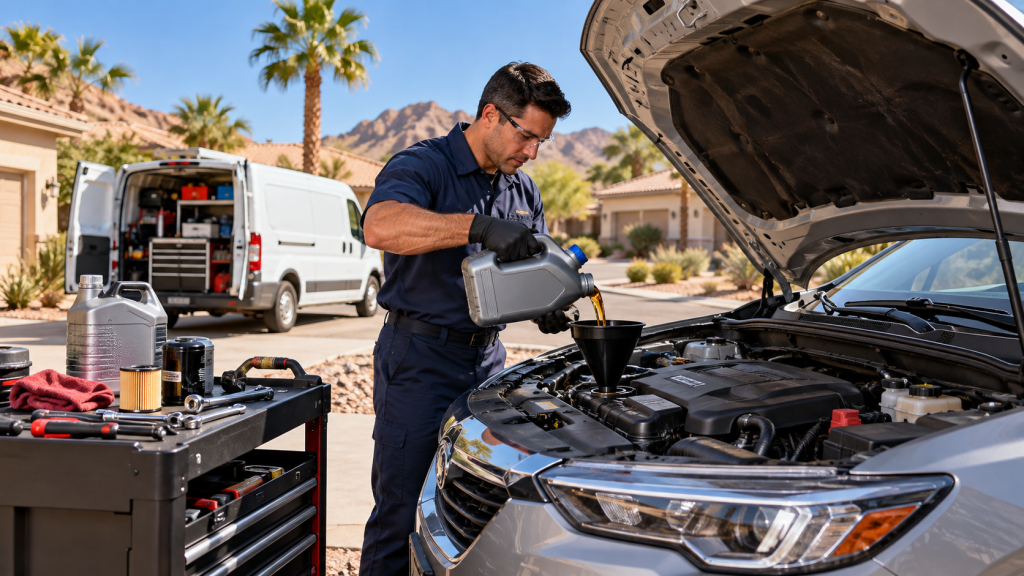
It is easy to put off car care until a storm is already on the way. A mobile mechanic can come to your home or workplace to inspect your wipers, battery, tires, brakes, belts and fluids so you can head into the season with confidence. Many inspections and common repairs can be done where your car is parked, which saves you a trip in the heat and the traffic. Keep in mind that some repairs may need a shop, and a good technician will tell you clearly what your car needs.Your Rainy Season Checklist
- Replace worn wiper blades and top off washer fluid.
- Clean the windshield inside and out, and check for chips or cracks.
- Test headlights, brake lights, turn signals and hazards.
- Check tire tread, pressure and sidewall condition.
- Have the brakes inspected if you notice noise, softness or pulling.
- Test the battery if your car is slow to start.
- Inspect belts, hoses and fluid levels.
- Confirm the defrost and AC are working.
- Plan your routes and avoid flooded roads.